Research Themes
We study the structure and mechanical properties of fault zones and how fault rocks evolve through the seismic cycle. Our work combines fieldwork and drill cores, microstructural analysis and rock-deformation experiments, and compares natural fault rocks with those produced in the laboratory.
Fault friction at seismic slip rates
During an earthquake, a fault slips at about one metre per second, and frictional heating, pore fluids and grain-scale processes on the slip surface govern how its strength changes. We shear fault gouges in the laboratory at seismic slip rates, often under water-saturated conditions, and examine the experimental products to link changes in friction to the processes behind them.
Recent work on clay-bearing and serpentinite gouges has examined frictional strength, fluidization, fluid drainage, and reactions driven by frictional heat such as dehydroxylation and thermal decomposition.
Selected papers
- Kuo, L.-W. et al., 2026. Dehydroxylation and amorphization of wet serpentinite gouges during experimental seismic slip and implications for coseismic fluid drainage. Journal of Structural Geology, doi: 10.1016/j.jsg.2025.105591.
- Nguyen, T. T. et al., 2024. Fluid drainage leads to thermal decomposition of wet gouge during experimental seismic slip. Geophysical Research Letters, doi: 10.1029/2023GL106879.
- Kuo, L.-W. et al., 2021. Frictional strength and fluidization of water-saturated kaolinite gouges at seismic slip velocities. Journal of Structural Geology, doi: 10.1016/j.jsg.2021.104419.
Records of earthquakes in fault zones
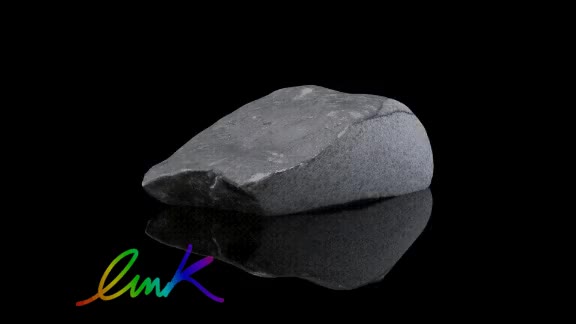
Earthquakes leave physical and chemical traces in fault rocks. Using outcrops and drill cores, including cores from the Taiwan Chelungpu-fault Drilling Project (TCDP), the Wenchuan Earthquake Fault Scientific Drilling Project (WFSD) and the Milun Fault Drilling and All-inclusive Sensing Project (MiDAS), we use fault-zone structure, microstructures and mineralogy to recognise past seismic slip.
Examples include graphitization of carbon-rich fault gouge, fault mirrors as a record of small earthquakes at shallow depths, and gouge fabrics that record stress on faults after earthquakes.
Selected papers
- Kuo, L.-W. et al., 2022. Gouge fabrics reset by thermal pressurization record stress on faults after earthquakes. Geology, doi: 10.1130/G50217.1.
- Kuo, L.-W. et al., 2016. Fault mirrors in seismically active fault zones: A fossil of small earthquakes at shallow depths. Geophysical Research Letters, doi: 10.1002/2015GL066882.
- Kuo, L.-W. et al., 2014. Gouge graphitization and dynamic fault weakening during the 2008 Mw 7.9 Wenchuan earthquake. Geology, doi: 10.1130/G34862.1.
Lightning fossils
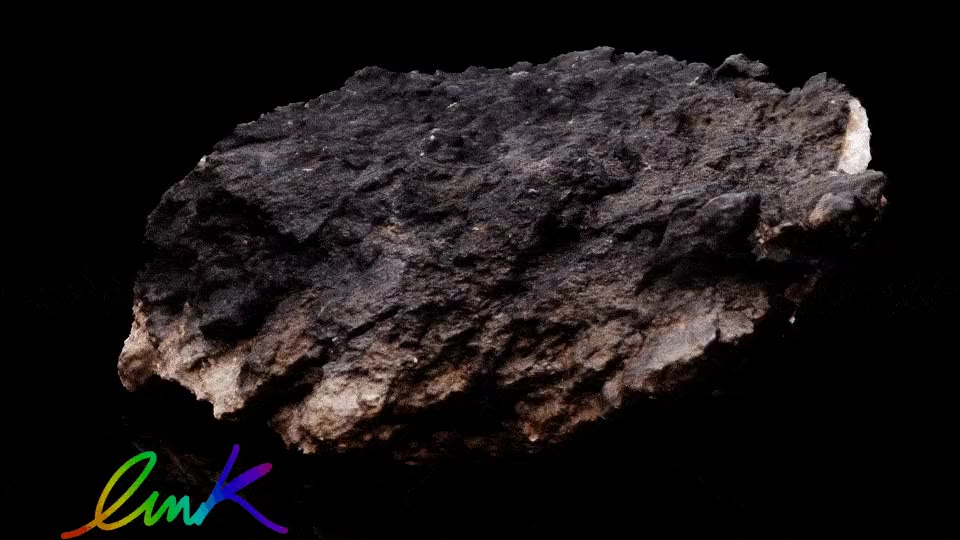
When lightning strikes rock, the surface can melt and be altered in an instant, leaving glassy scars known as fulgurites. Working mainly on fulgurites on granitic gneiss in Kinmen, Taiwan, we document the high-temperature and high-pressure microstructures produced by lightning and how these scars alter over time, to help recognise rare lightning scars in the geological record.
Selected papers
- Chen, T.-Y. et al., 2026. Alteration evolution of lightning fossils: Insights from natural fulgurites scars and hydrothermal experiments. American Mineralogist, doi: 10.2138/am-2025-9815.
- Chen, T.-Y. et al., 2022. Lightning-induced features on granitic gneiss and its implication for rare lightning scars from the geological record. Contributions to Mineralogy and Petrology, doi: 10.1007/s00410-022-01973-y.
- Kuo, L.-W. et al., 2021. Lightning-induced high temperature and pressure microstructures in surface and subsurface fulgurites. Scientific Reports, doi: 10.1038/s41598-021-01559-x.